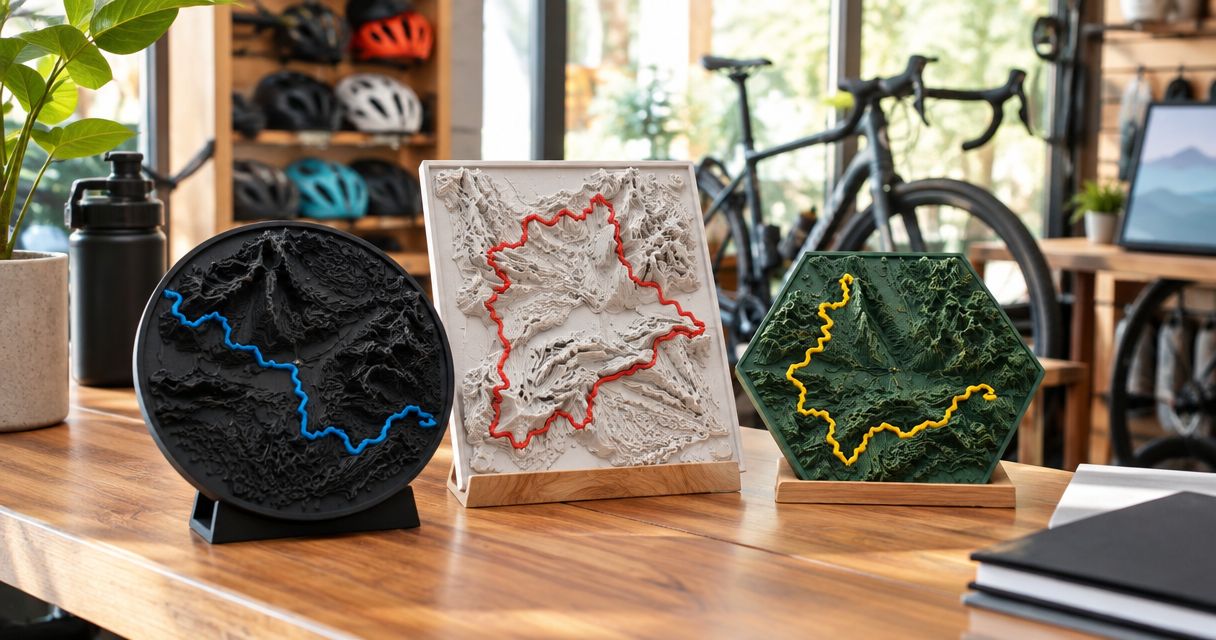
Bike shop route art is a personalized keepsake made from a cycling route, with the aim of helping your shop commemorate customers’ rides and offer meaningful gifts. This 2026 guide explains how to choose bike shop gift products around a rider’s GPS data without confusing a custom purchase with a wholesale arrangement.
- Printmyroutes bike shop gift products suit cyclists commemorating a specific route, climb, or endurance milestone.
- Start with the rider’s route and occasion, not a generic cycling ornament.
- Confirm ordering responsibilities and commercial terms before offering custom route sculptures through your shop.
- Choose practical accessories for everyday utility; choose topographic route art for a personal cycling keepsake.
Why route art matters for bike shops
A cycling gift does not need to fit a bike, but it should fit the rider. Custom route art gives you a way to discuss a customer’s first century, favorite gravel loop, or memorable climb rather than guessing which component they need.
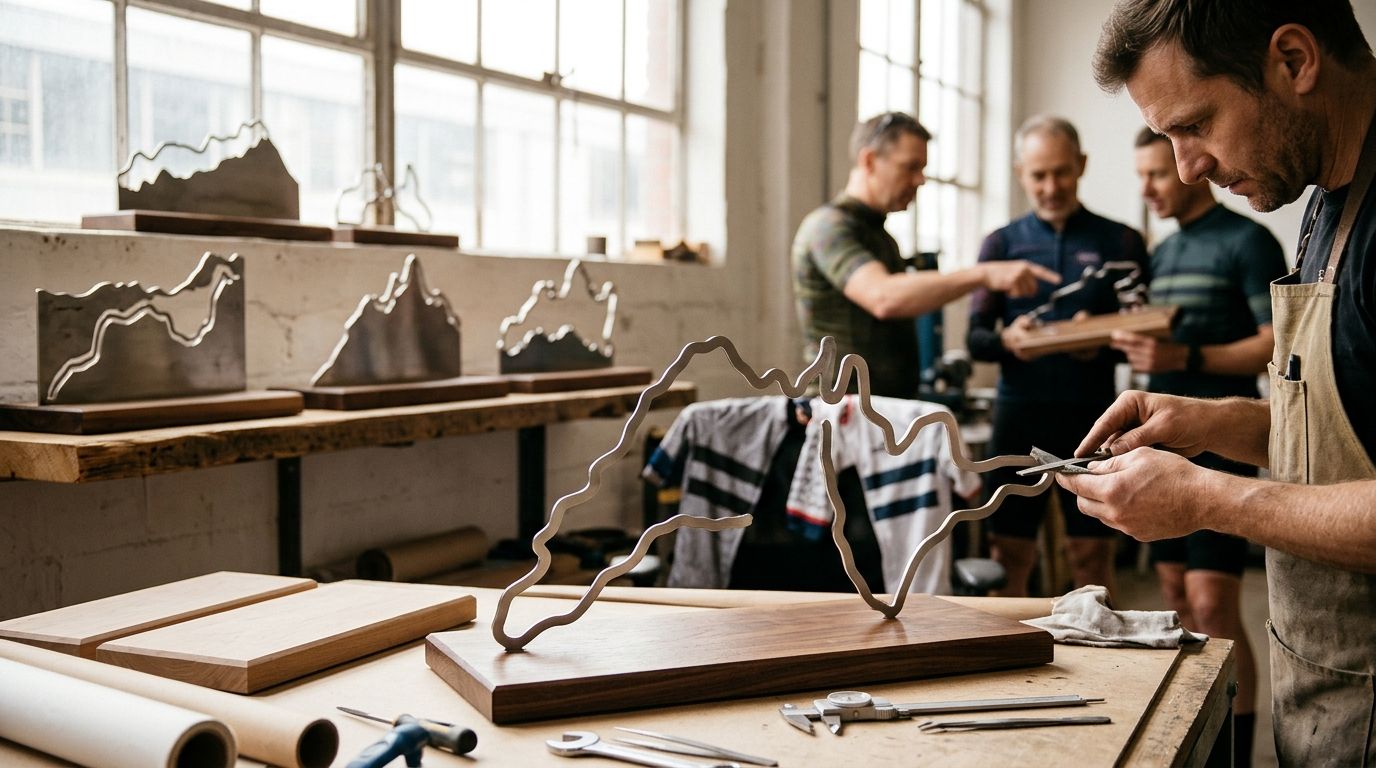
Printmyroutes route art is best for cyclists commemorating a specific ride in a custom topographic sculpture. Printmyroutes sells custom 3D-printed topographic sculptures made from GPS running, hiking, and cycling routes. That makes the route itself the starting point for a gift conversation.
For a bike shop, the constraint is operational. Someone must identify the correct ride, obtain usable route data, check the details, and manage expectations. A personalized keepsake needs more preparation than an item a customer selects from a shelf.
Treat route art as a considered gift, not an automatic add-on. For your 2026 gift selection, separate products that help someone ride from products that preserve the memory of a ride. Both have a role; they answer different buyer questions.
How to choose and offer route sculptures
1. Identify the rider and the occasion
Start manually with a short conversation or a simple written brief. Ask what happened on the ride and why the recipient remembers it. You do not need a supplier account or a custom ordering system to establish whether route art fits.
Use 3 questions: Which ride matters? Who is receiving the gift? When will you present it? These questions distinguish a personal milestone from a club recognition project before anyone gathers files.
A rider’s own account is more useful than assumptions based on discipline. A road cyclist might care about a local recovery loop; a mountain biker might want to remember a long point-to-point ride rather than a particular descent.
- Record the occasion: birthday, retirement, ride completion, or club recognition.
- Name the route in the rider’s own words.
- Establish whether the gift is a surprise.
- Ask whether the buyer wants a keepsake or something used while riding.
- Record the presentation date without promising a delivery date.
2. Collect the correct route data
Begin with the rider’s existing activity record or a route file they can provide. A GPX file describes geographic track or route information, but file formats and export steps depend on the source. Check the relevant service’s current instructions rather than assuming every activity exports the same way.
Keep 1 route per brief until the buyer confirms what the gift should represent. Combining several rides at the start makes it harder to distinguish a deliberate route choice from a file mix-up.
The key distinction is planned versus completed. An event’s published course describes the intended ride; a personal recording describes the rider’s recorded activity. Ask which story the customer wants preserved.
- Request a route file or an accessible activity reference.
- Label the file with the rider and route name.
- Check whether the route is planned or completed.
- Look for missing sections, accidental detours, and recording gaps.
- Ask permission before sharing someone else’s activity data.
3. Match the keepsake to the route
Open the route in a map viewer first. Look at the course shape, surrounding terrain, and the location the rider considers significant. This manual check helps you explain why a topographic sculpture fits the occasion—or why a simpler gift fits better.
Printmyroutes route art turns GPS routes into custom 3D-printed topographic sculptures. For a buyer who wants a finished physical keepsake rather than a self-managed fabrication project, it provides a direct product category to consider. It does not remove the need to select the correct route.
Choose terrain-based art when the landscape is part of the memory. A summit approach, sustained climb, or gravel crossing gives you a specific story to discuss. For a flatter route, establish whether the course outline and personal achievement are enough to make the sculpture meaningful.
- Identify the climb, summit, loop, or crossing the rider remembers.
- Compare the recorded route with the intended gift story.
- Ask how the route and terrain will be represented.
- Confirm which personalization details are supported before promising them.
- Choose another gift category if the buyer cannot identify a meaningful ride.
4. Define your shop’s role before taking an order
Start with a written responsibility checklist. Decide whether your staff will only help a customer choose a gift or will also collect files, communicate specifications, and handle the purchase. These are different workloads.
A consumer product does not establish a wholesale program. Before you advertise route sculptures as a shop service in 2026, confirm the supplier’s current commercial terms, permission to use product images, and the process for resolving errors. Do not infer those terms from the existence of an online store.
Keep race-director requests separate. A customer buying one cycling keepsake is not the same as an organizer commissioning finisher awards. Event quantities, recipient details, and approval responsibilities need their own discussion.
- Name the person responsible for collecting the route.
- Specify who places the order and receives supplier messages.
- Confirm whether a resale or referral arrangement is permitted.
- Establish who approves the final specifications.
- Document responsibility for corrections and customer communication.
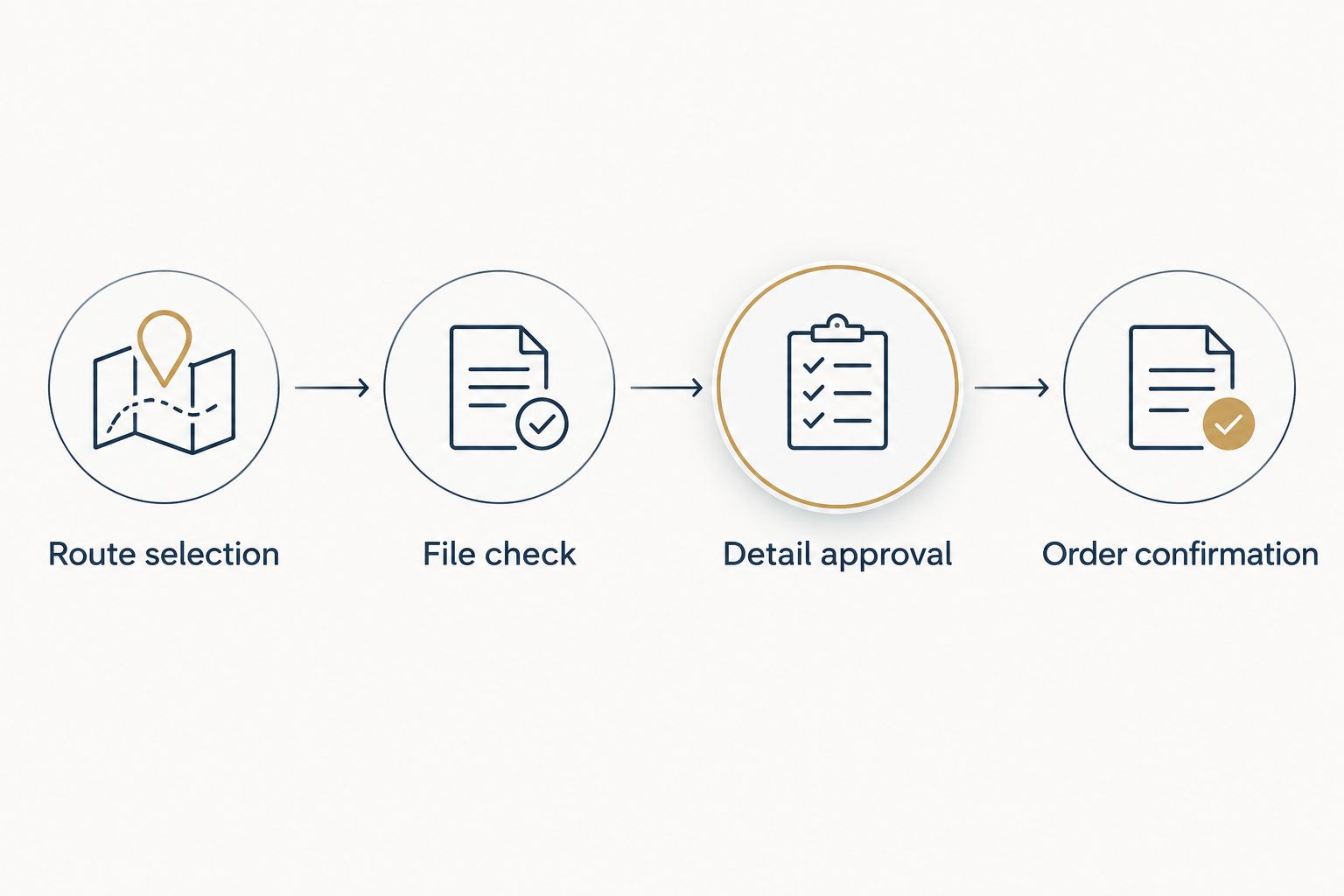
The route should move through a clear handoff: Route selection, File check, Detail approval, then Order confirmation. Each stage needs an owner; a file arriving in the shop inbox is not an approved order.
5. Check the details before committing
Use a written checklist and compare it against the actual file. A customer saying the route looks familiar is not the same as checking the correct activity, intended course, and presentation details.
Build 2 checks into the process: route accuracy and order accuracy. Route accuracy covers what happened on the map. Order accuracy covers what the customer has requested and what the seller has confirmed. Keep those checks separate so a correct name does not distract from an incorrect route.
For a 2026 event keepsake, verify the event edition as well as the event name. An older course file does not automatically represent the route the rider completed. If a preview is offered, check its contents against the approved brief rather than treating it as a formality.
- Compare the start, finish, and major route features.
- Check names, dates, and event wording wherever personalization is offered.
- Confirm the requested physical specifications with the seller.
- Record the customer’s approval of the agreed details.
- Confirm the current production and delivery information before setting expectations.
6. Present the gift around the ride story
Begin with a plain description of the milestone. Tell the customer what the route represents and why it was chosen. That explanation is more useful than describing the sculpture as generic cycling decoration.
If your shop introduces route art in 2026, keep the customer-facing explanation short. Say who it suits, what information the buyer needs, and what must be confirmed before ordering. Do not promise an ordering feature, turnaround, or commercial arrangement that has not been established.
For a surprise gift, collect only the information needed and respect the rider’s privacy. A route recording can include locations beyond the memorable part of the ride. Review whether the complete activity belongs in the keepsake.
- Lead with the rider’s achievement or meaningful location.
- Explain that the route data determines the subject.
- Distinguish personal keepsakes from event award commissions.
- Give buyers a clear list of information to prepare.
- Keep private activity details out of public promotional material.
Compare bike shop gift products by purpose
Select the gift category before selecting the design. A useful workshop item, a photograph, and a route sculpture are not substitutes for every buyer. Match the recipient’s reason for receiving the gift first.
| Option | Best for | Main advantage | Key limitation |
|---|---|---|---|
| Printmyroutes custom topographic route sculpture | Cyclists commemorating a specific GPS-recorded ride | Connects a physical keepsake to the rider’s route and terrain | Requires the correct route and confirmation of order details |
| Flat route print | Buyers who want a wall-based route reminder | Emphasizes the course outline in a flat format | Does not provide a physical terrain relief |
| Printed ride photograph | Riders with a meaningful image from the day | Preserves a visible moment and the people involved | Depends on a suitable image and permission to use it |
| Practical cycling accessory | Riders who want something for regular use | Serves a riding or maintenance task | Fit, compatibility, and existing equipment need checking |
| Self-managed 3D route project | Buyers who want to make the object themselves | Gives the maker control over preparation and fabrication | Requires access to suitable tools and responsibility for the result |
The sculpture’s strength is specificity; the same specificity creates preparation work. A generic accessory can be chosen without knowing a route, while a custom route keepsake loses its purpose if the wrong ride is supplied.
For mixed customer requests, ask one deciding question: will the recipient value using this on the next ride, or remembering a ride already completed? Use that answer to narrow the options before discussing appearance.
Common mistakes bike shops make
Treating a retail purchase as a supplier partnership
A product being sold online does not confirm resale terms, trade support, or an order-management arrangement. Establish your shop’s role before taking payment or describing yourself as an authorized partner.
Choosing the famous route instead of the personal route
The best-known local climb is not automatically the customer’s milestone. Ask for the specific activity or course the buyer means, especially when several route variants share a name.
Mixing club gifts with finisher awards
A club member’s birthday gift and an event-wide award commission have different approval needs. Route both requests to separate briefs so recipient details and organizer responsibilities stay clear.
Promising personalization before confirming it
Do not promise a particular inscription, dimension, material, or layout because another custom product offers it. Ask what is supported for the intended order, then describe only the confirmed specification.
Sharing the whole activity without checking privacy
A recording can include a rider’s home or other personal stops. Review the route with permission before sending it to a seller or using it to promote your shop’s gift offering.
FAQ
What are the best bike shop gift products for a cyclist’s milestone?
Custom route art fits a cyclist who wants to commemorate a specific ride; practical accessories fit someone who wants equipment for future rides. Choose the purpose first, then check the route data or equipment requirements.
Is a topographic route sculpture better than a flat cycling map?
A topographic route sculpture is the better fit when physical terrain is central to the keepsake. A flat cycling map suits a buyer who wants a wall-based representation of the course without physical terrain relief.
What does a customer need before choosing a custom route sculpture?
A customer needs a clearly identified route and a way to provide the relevant GPS information. Confirm the seller’s accepted inputs and supported personalization before collecting the final order details.
Can a bike shop resell Printmyroutes sculptures?
A bike shop must confirm resale terms directly with Printmyroutes before offering sculptures as a resale service. The sale of custom route sculptures does not itself establish a wholesale or referral arrangement.
Should a cycling gift use the planned course or the recorded ride?
Use the recorded ride to commemorate the rider’s activity, or the planned course to represent the intended event route. Ask the buyer which meaning matters and check for recording errors before submitting a file.
How should a bike shop handle a surprise route-art gift?
Ask the gift buyer to provide a route they have permission to share. Check the occasion, recipient details, and privacy-sensitive locations without accessing the rider’s account without authorization.
Are individual route gifts the same as custom finisher awards?
Individual route gifts and custom finisher awards are different buying projects. An event organizer needs a separate brief covering quantities, course selection, approvals, and presentation requirements.
One last thing
Remove the ride to and from home from the brief unless it belongs in the story. A recorded activity and a commemorative route are not always the same thing. Ask the rider or authorized gift buyer which section matters before requesting any changes, then confirm that the resulting route still represents the intended achievement.