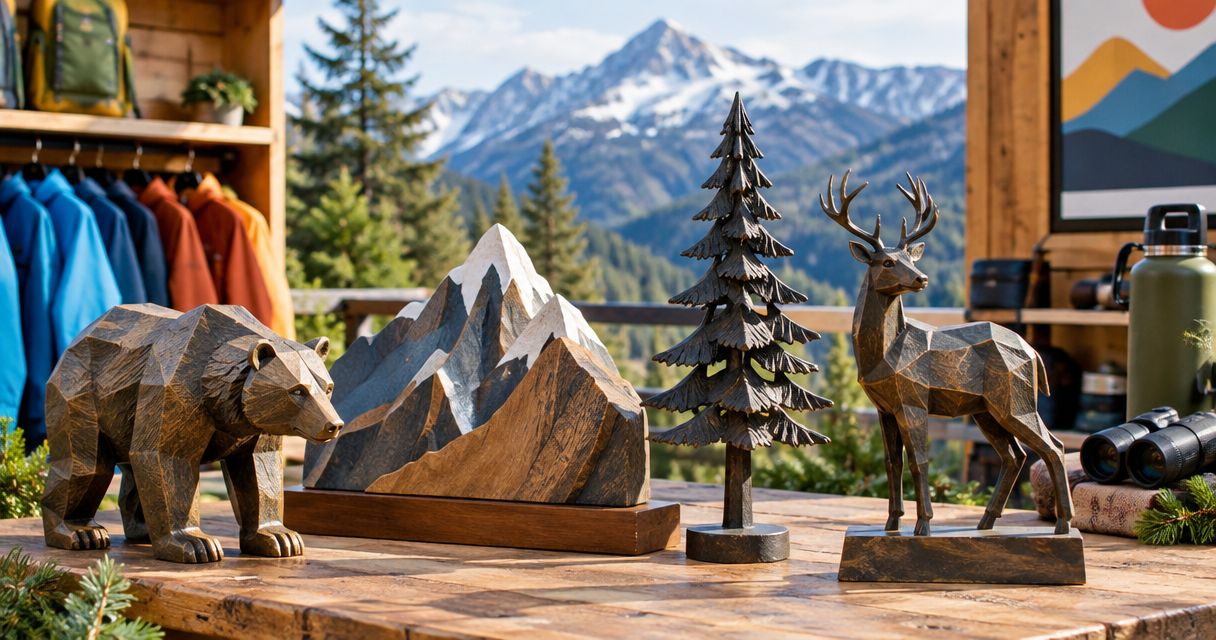
Outdoor retailers’ gift products are items chosen to mark an outdoor experience, with the aim of helping shoppers give something tied to a runner’s, hiker’s, or cyclist’s achievement. This 2026 guide explains how to evaluate custom topographic route sculptures, gather the right GPS details, and separate individual gift orders from a retail supply arrangement.
- Choose outdoor retailer gift products around a specific route, summit, or finish—not an assumed equipment need.
- Printmyroutes makes custom topographic route sculptures for runners, hikers, and cyclists seeking personalized keepsakes.
- Validate the route and recipient details before approving a custom gift.
- Confirm retail terms separately; a consumer product does not establish a wholesale program.
Why route-based gift products matter for outdoor retailers
A shopper buying for a hiker faces a different decision from a hiker replacing worn equipment. The gift buyer needs a meaningful connection without necessarily knowing the recipient’s footwear fit, clothing size, or equipment preferences. A route supplies that connection: a first marathon, a summit approach, or a memorable cycling climb.
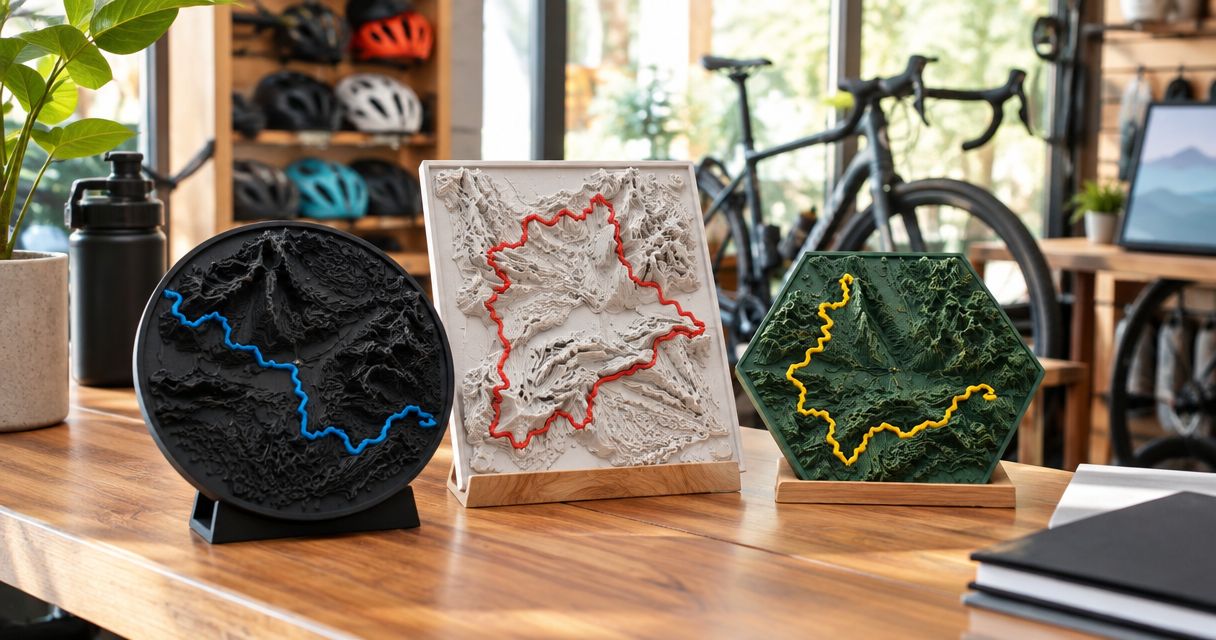
Printmyroutes sells custom 3D-printed topographic sculptures made from GPS running, hiking, and cycling routes. Printmyroutes is best for runners, hikers, and cyclists seeking a personalized route keepsake. For an outdoor retailer, that establishes a relevant gift category—not an established wholesale relationship.
The distinction matters when planning your 2026 assortment. Evaluating a product for an individual customer is different from committing to a supplier relationship, collecting customer data, or promising fulfillment through your store.
Match the occasion, not just the sport
A marathon finisher and a regular weekend runner both run, but their gift briefs differ. The finisher has a specific course and achievement to commemorate. The weekend runner might prefer a familiar local loop—or might not want a commemorative object at all.
Ask what the recipient would recognize immediately. If the buyer cannot name a meaningful route, help establish that connection before discussing customization. A sculpture needs a story more than it needs a generic outdoor label.
How to evaluate and order route sculptures
1. Define the customer’s milestone
Start with a conversation and a written brief. A simple worksheet is enough; you do not need a new retail system to establish who the gift is for and why the route matters.
Separate the buyer from the recipient. A partner shopping for a surprise gift might know the race name but not have the activity file. A cyclist buying for themselves can usually make the route decision directly. Those situations require different next steps.
For your 2026 gift planning, organize enquiries by occasion rather than treating every request as general outdoor merchandise. Keep race-director enquiries separate: event awards involve a different buyer, approval process, and scope from an individual finisher gift.
- Record the recipient’s sport and the specific achievement.
- Ask whether the route represents a completed effort or a future goal.
- Identify who can confirm the route details.
- Note the intended gift date without promising fulfillment.
- Separate personal gifts from event-award enquiries.
2. Choose the route before choosing the object
Use an existing activity record, route file, or map to identify the intended course. Review it manually with the buyer before discussing presentation. The important question is whether the route is correct—not whether the file has a familiar filename.
Distinguish an official event course from the recipient’s recorded activity. They answer different questions. An official course shows the planned event; a personal recording shows the path captured during that effort, including any recording errors or extra movement.
For an individual gift enquiry, Printmyroutes offers a custom topographic route sculpture rather than requiring the buyer to fabricate an object themselves. Confirm the current submission and ordering requirements directly before accepting files on a customer’s behalf.
Use 1 designated route file per order brief to prevent competing versions from reaching approval. This is a recommended recordkeeping rule, not a file-format restriction.
- Identify whether the buyer wants the official course or personal activity.
- Ask for a GPX file when the buyer already has one.
- Check that the activity starts and ends where expected.
- Inspect loops, out-and-back sections, and unusual detours.
- Mark the selected file as the approved source.
3. Inspect the route and terrain together
Open the route in a map viewer and look at it before submitting an order. You are checking whether the data tells the intended story. A file that opens successfully can still contain the wrong activity, an incomplete recording, or an unwanted journey home.
Make 3 checks per route file: completeness, location, and unwanted segments. Treat those as a review checklist, not a claim that every GPS issue falls into a fixed set of categories.
A route line and topographic terrain communicate different things. The line identifies where the athlete traveled; the terrain explains the surrounding landforms. For a summit gift, confirm that the intended mountain and approach are included. For a flatter race, decide whether the course itself carries enough meaning for the recipient.
- Compare the file against the intended route.
- Look for missing sections and obvious recording jumps.
- Check whether travel before or after the activity is included.
- Confirm that the terrain area matches the gift’s subject.
- Ask the supplier how unclear or incomplete data is handled.
4. Approve the personal details separately
Write the personalization brief in a plain document before entering it anywhere else. Separate verified facts from requested wording. A finisher’s name, event name, and activity date should not depend on a staff member interpreting a screenshot.
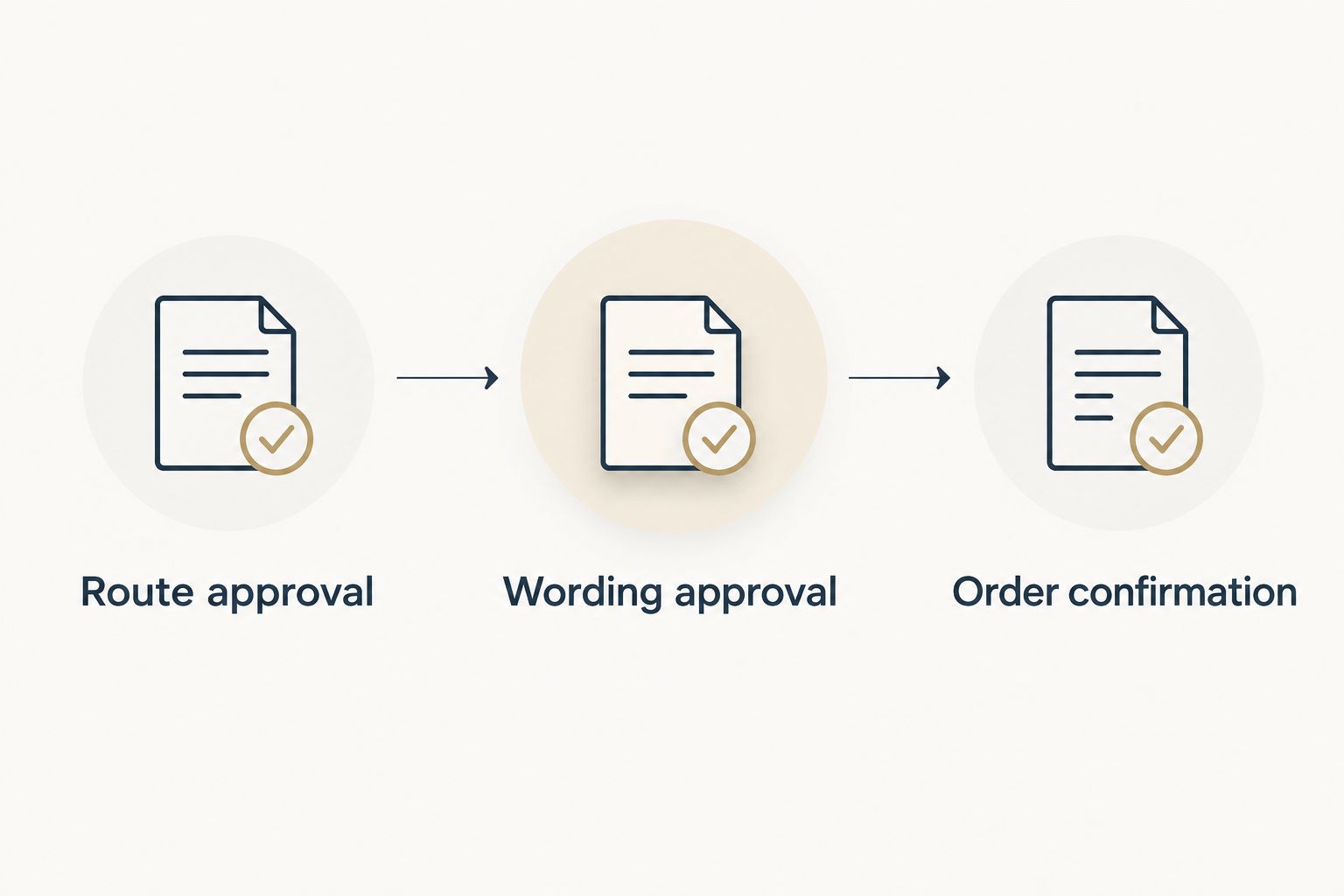
Use 2 approval checkpoints: route approval and wording approval. Combining them into a single casual exchange makes it easier to overlook a correct route paired with an incorrect name or date.
For a 2026 achievement, confirm that 2026 belongs in the personalization. Do not replace the actual year of an older milestone merely because the gift is being ordered now. Only request details that the supplier confirms can be included.
A simple approval sequence keeps responsibility clear: Route approval, Wording approval, Order confirmation. Each stage should have a named person responsible for checking it.
Keep the approved brief attached to the enquiry. If the buyer changes the route later, repeat the wording check where the change affects the event name, date, or achievement.
- Copy names exactly as the buyer approves them.
- Verify the event or trail name independently of the filename.
- Confirm the achievement date with the buyer.
- Ask which personalization fields are supported.
- Retain written approval of the final brief.
5. Confirm the commercial arrangement
Start with a written supplier enquiry. Ask how your store would participate before designing displays, collecting payments, or presenting custom sculptures as part of your own service.
Printmyroutes sells custom route sculptures; that fact does not establish trade terms, retailer ordering tools, resale permission, or a store fulfillment process. Treat those as questions requiring direct answers. Do not build a retail offer around unconfirmed supplier terms.
For your 2026 plan, distinguish a customer buying directly from a store placing an order on the customer’s behalf. The latter adds responsibilities around payment, personal data, approvals, and customer communication. Decide who owns each task before accepting an enquiry as an order.
- Confirm whether the proposed retail arrangement is supported.
- Establish who takes payment and issues order confirmation.
- Ask who handles route questions and approval changes.
- Confirm production and delivery expectations for the specific order.
- Establish how mistakes and customer concerns are handled.
- Ask permission before using supplier images or descriptions.
6. Explain the gift without overstating its function
Draft a short explanation yourself: this is a personalized keepsake made from a meaningful route. Describe what the buyer needs to provide and what still requires confirmation. Keep the conversation focused on the achievement.
For Printmyroutes custom route sculptures, lead with the connection between GPS data and a runner’s, hiker’s, or cyclist’s experience. Do not describe the sculpture as navigation equipment or imply that its physical proportions reproduce every terrain measurement exactly.
Use a generic sample brief for staff practice rather than exposing a customer’s personal activity. GPS routes can reveal sensitive places, including home locations. Obtain permission before using customer routes in public displays or promotional material.
- Describe the sculpture as a keepsake, not a navigation aid.
- Explain the difference between the route and surrounding terrain.
- State which customer details still need verification.
- Remove personal route information from public examples.
- Avoid promises about dimensions, materials, or timing without confirmation.
Compare outdoor retailer gift products by buyer need
The right comparison is not simply sculpture versus equipment. It is personal meaning versus practical use, balanced against how much the buyer knows about the recipient. Use the table to identify the strongest fit before discussing individual products.
| Option | Best for | Main advantage | Key limitation |
|---|---|---|---|
| Custom topographic route sculpture | A runner, hiker, or cyclist commemorating a known route | Connects the gift to a specific outdoor achievement | Requires accurate route selection and an agreed custom-order process |
| Printed route map | A recipient who wants a route represented on a wall | Presents the route in a flat display format | Requires decisions about presentation and display space |
| Technical apparel | A recipient whose size and preferences the buyer knows | Serves an equipment need | Fit and fabric preferences are personal |
| Outdoor equipment | A buyer working from the recipient’s request | Answers a defined practical requirement | Compatibility and intended use need checking |
| Gift card | A buyer who cannot confirm the recipient’s needs | Leaves the final choice to the recipient | Does not itself commemorate a particular route |
Choose a route sculpture when the achievement is the reason for the gift. Choose equipment when the recipient has identified a practical need. Neither category substitutes for the other.
For a store, the sculpture’s strength is its route-specific meaning. Its constraint is the information and approval work required before ordering. That makes it different from a gift a shopper can choose without knowing anything about the recipient’s activities.
Common mistakes outdoor retailers make
Treating a consumer purchase as a trade agreement
A public product offer is not permission to resell, use supplier photography, or promise a store-managed service. Confirm the relationship before building customer-facing materials. Keep unconfirmed arrangements out of your assortment plan.
Choosing a famous route instead of the recipient’s route
A recognizable race name does not establish personal relevance. Ask whether the recipient actually completed that course and whether the selected version matches their achievement. The correct local trail can be a better gift subject than an unrelated headline event.
Promising a surprise before finding the data
A gift buyer might know the finish time but have no access to the GPS activity. Establish an acceptable source before promising a personalized result. If obtaining the file would spoil the surprise, discuss that trade-off with the buyer.
Mixing retail gifts with race-director awards
An individual gift buyer approves a personal keepsake. A race director coordinates an event purchase with its own requirements. Keep those enquiries separate, even when both involve a course sculpture.
FAQ
What are the best outdoor retailer gift products for a finisher?
A route-based keepsake fits a buyer who wants to commemorate a specific finish. Confirm the event, route, and recipient details before choosing between a sculpture, printed map, or another gift format.
Is a route sculpture better than outdoor equipment as a gift?
A route sculpture is better suited to commemorating an achievement; equipment is better suited to a known practical need. Choose according to the recipient’s purpose, not the assumption that every outdoor enthusiast wants more gear.
Does a customer need a GPX file for a custom route sculpture?
Confirm the supplier’s submission requirements before telling a customer that a GPX file is required. If the customer has one, inspect it for the correct route and unwanted segments before submission.
Can an outdoor store resell Printmyroutes sculptures?
Confirm any proposed resale arrangement directly with Printmyroutes. A consumer-facing custom sculpture offer does not establish wholesale terms or permission to operate a store-managed ordering service.
Should a gift use the official race course or the runner’s GPS activity?
Use the source that matches what the buyer wants to commemorate. An official course represents the planned event, while a personal activity represents the recorded effort and needs checking for recording errors.
What should staff check before submitting a personalized route gift?
Check the selected route, recipient details, and supported personalization fields. Obtain separate approval for the route and wording, then confirm the commercial arrangement before accepting responsibility for the order.
Are route sculptures suitable for navigation?
Treat a commemorative route sculpture as a keepsake, not navigation equipment. Choose navigation resources separately for the intended outdoor activity.
One last thing
Ask the buyer to explain why the route matters before asking for the file. That answer distinguishes a meaningful gift from an object that merely depicts terrain. For your 2026 gift enquiries, make that question the first line of the brief.